Maintaining a sparkling pool requires diligence; readily available pool maintenance guides, often in PDF format, offer checklists and schedules for optimal water quality.
Why Regular Pool Maintenance is Crucial
Consistent pool maintenance isn’t merely about aesthetics; it’s fundamentally linked to health, safety, and the longevity of your investment. Neglecting routine upkeep, as detailed in comprehensive pool maintenance guides – frequently available as downloadable PDFs – can lead to a breeding ground for bacteria and algae.
These guides emphasize that proper water chemistry prevents skin and eye irritation, ensuring a safe swimming environment for all. Furthermore, regular inspections, outlined in these resources, identify and address potential equipment malfunctions early on, averting costly repairs. A well-maintained pool also retains its value, protecting your financial investment. Ignoring maintenance accelerates deterioration, leading to expensive renovations or even complete replacement.
Understanding Pool Water Chemistry
Pool water chemistry is the cornerstone of safe and enjoyable swimming, and detailed pool maintenance guides – often found as convenient PDF downloads – dedicate significant attention to this crucial aspect. Maintaining proper chemical balance involves regularly testing and adjusting four key parameters: chlorine levels, pH, alkalinity, and calcium hardness.
These guides explain how chlorine disinfects, eliminating harmful bacteria and algae. pH levels impact chlorine’s effectiveness and swimmer comfort, while alkalinity stabilizes pH. Calcium hardness prevents corrosion or scaling. Mastering these elements, as outlined in these resources, ensures crystal-clear water, protects pool surfaces, and safeguards swimmer health. Imbalance can lead to irritation, damage, and costly remediation.
Weekly Pool Maintenance Checklist
Pool maintenance guides in PDF format emphasize a consistent weekly routine, including water testing, physical cleaning, and filter checks for a healthy pool.
Water Testing and Balancing
Pool maintenance PDF guides consistently highlight water testing as foundational. Regular checks—ideally weekly—ensure a safe and enjoyable swimming experience. Accurate testing dictates necessary chemical adjustments. Key parameters include chlorine, pH, alkalinity, and calcium hardness. Maintaining proper chlorine levels (typically 1-3 ppm) sanitizes the water, preventing algae and bacteria.
pH balance (7.2-7.8) is crucial for chlorine effectiveness and swimmer comfort. Alkalinity (80-120 ppm) stabilizes pH, preventing fluctuations. Calcium hardness (200-400 ppm) protects pool surfaces. PDF checklists often include target ranges and recommended chemical dosages. Consistent balancing, guided by these resources, safeguards both the pool’s structure and the health of its users, extending the lifespan of equipment.
Testing Chlorine Levels
Pool maintenance PDF guides universally emphasize frequent chlorine testing, typically 1-3 times weekly, using a test kit or strips. Ideal levels generally range from 1 to 3 parts per million (ppm), though this can vary based on stabilizer levels and pool usage. Low chlorine invites algae and bacteria, while excessive amounts irritate skin and eyes.
Many PDF resources detail different chlorine types – free chlorine (FC) being the active sanitizer, and combined chlorine (CC) indicating contaminants. Maintaining a proper FC/CC ratio is vital. Digital testers offer precision, but liquid test kits remain reliable. Consistent monitoring, as outlined in these guides, ensures effective sanitation and a safe swimming environment, preventing health hazards and costly remediation.
Testing pH Levels
Pool maintenance PDF guides consistently highlight pH as a critical water parameter, ideally maintained between 7.2 and 7.8. This range optimizes chlorine effectiveness and swimmer comfort. Low pH (acidic water) corrodes equipment and irritates eyes, while high pH (alkaline water) reduces chlorine’s sanitizing power and causes scaling.
Testing is typically done alongside chlorine, using test kits or strips detailed in these guides. Adjustments are made with pH increaser (soda ash) or pH decreaser (muriatic acid), always following product instructions carefully. Regular pH monitoring, as emphasized in PDF resources, prevents imbalances that lead to water clarity issues, equipment damage, and an unpleasant swimming experience.
Testing Alkalinity Levels
Pool maintenance PDF guides stress the importance of alkalinity as a pH buffer, ideally kept between 80-120 ppm. Proper alkalinity prevents drastic pH swings, ensuring stable water chemistry. Low alkalinity causes pH to fluctuate wildly, leading to corrosion or scaling, while high alkalinity makes pH difficult to adjust.
Testing is usually performed with a pool test kit or strips, as detailed in downloadable guides. Adjustments involve adding alkalinity increaser (sodium bicarbonate) to raise levels. Consistent alkalinity testing, as recommended in these PDF resources, is crucial for maintaining balanced water, protecting equipment, and maximizing sanitizer effectiveness, ultimately contributing to a safe and enjoyable swimming environment.
Testing Calcium Hardness
Pool maintenance PDF guides emphasize calcium hardness as vital for protecting pool surfaces and equipment. Ideal levels typically range from 200-400 ppm, though this can vary based on pool material. Low calcium hardness can cause water to leach calcium from plaster, leading to pitting and damage, as detailed in many downloadable resources.
Conversely, high calcium hardness can result in scaling and cloudy water. Testing is done using a pool test kit, often outlined in comprehensive PDFs. Adjustments involve adding calcium chloride to raise levels or partially draining and refilling with softer water to lower them. Maintaining proper calcium hardness, per these guides, prevents costly repairs and ensures long-lasting pool enjoyment.
Physical Inspection and Cleaning
Pool maintenance PDF guides consistently highlight the importance of regular physical inspections and cleaning. These tasks remove debris and prevent algae growth, ensuring a safe and inviting swimming environment. Daily skimming removes leaves and insects, while weekly vacuuming eliminates settled dirt and sediment, as detailed in downloadable checklists.
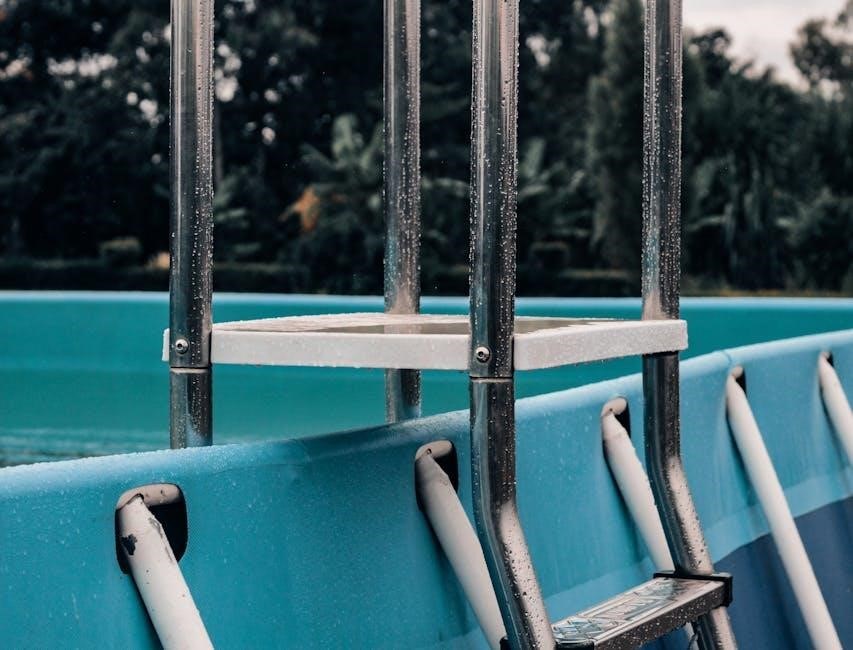
Brushing pool walls and tiles prevents staining and buildup. Many guides emphasize inspecting equipment like lights and ladders for damage. Consistent physical maintenance, as outlined in these resources, reduces chemical demand and extends the life of your pool’s surfaces and components, contributing to overall cost savings and enjoyment.
Skimming the Pool Surface

Pool maintenance PDF guides universally recommend daily skimming as a foundational practice. This involves using a pool skimmer net to remove floating debris – leaves, insects, pollen – before they sink and decompose. Consistent skimming prevents staining, reduces filter workload, and maintains water clarity. Many guides detail proper skimming techniques, emphasizing overlapping passes and attention to areas where debris accumulates.
Effective skimming, as illustrated in these downloadable resources, minimizes algae growth by removing organic matter that serves as food. It’s a quick, simple task that significantly impacts pool hygiene. Regular skimming, alongside other cleaning routines detailed in pool care PDFs, ensures a consistently clean and enjoyable swimming experience.
Vacuuming the Pool Floor
Pool maintenance PDF guides consistently highlight vacuuming as essential for removing settled debris – dirt, sand, and algae – that skimming misses. Manual vacuuming, using a pool vacuum head connected to the skimmer, is detailed in many resources. Alternatively, robotic pool cleaners, often discussed in advanced guides, offer automated solutions.
These downloadable guides emphasize slow, overlapping passes for thorough cleaning. Proper vacuuming prevents staining, improves water circulation, and enhances the effectiveness of sanitizers. PDFs often include troubleshooting tips for common vacuuming issues, like clogged hoses or a lack of suction. Consistent floor vacuuming, as outlined in these resources, contributes significantly to a pristine pool environment.
Brushing Pool Walls and Tiles
Pool maintenance PDF guides universally recommend regular brushing of pool walls and tiles to prevent algae adhesion and calcium buildup. These resources detail using a pool brush – nylon for vinyl liners, stainless steel for concrete – to scrub surfaces thoroughly. Brushing dislodges dirt and contaminants before they become firmly established, simplifying vacuuming.
Many downloadable guides emphasize paying close attention to areas prone to algae growth, like corners and around fittings. Proper brushing, as illustrated in these PDFs, not only improves aesthetics but also enhances water circulation and sanitizer effectiveness. Guides often include advice on brush selection and techniques for different pool surfaces, ensuring optimal cleaning and longevity.
Filter Maintenance
Pool maintenance PDF guides consistently highlight filter upkeep as critical for clear water. These documents detail procedures for various filter types: sand, cartridge, and diatomaceous earth (DE). They emphasize regular backwashing for sand and DE filters, explaining how to reverse water flow to expel trapped debris, as shown in illustrated steps.
Cartridge filters, according to these guides, require periodic removal and rinsing with a hose. PDFs often include schedules – typically every 2-6 weeks – and instructions for deep cleaning with a filter cleaner. Proper filter maintenance, as outlined, ensures efficient operation, prevents pressure buildup, and extends the filter’s lifespan, contributing to overall pool health.
Backwashing the Filter
Pool maintenance PDF guides universally detail backwashing as a crucial sand and DE filter procedure. These guides illustrate a step-by-step process: turning off the pump, rotating the multiport valve to the “Backwash” setting, and initiating the pump. The PDFs explain that backwashing reverses water flow, flushing accumulated dirt and debris through the waste line.
Guides emphasize monitoring the pressure gauge; backwash when pressure rises 8-10 PSI above the clean starting pressure. They also advise rinsing the filter after backwashing, returning the valve to “Filter,” and resuming normal operation. Proper backwashing, as demonstrated in these PDFs, maintains optimal filter performance and water clarity, preventing strain on the pump.
Cleaning the Filter Cartridge/DE
Pool maintenance PDF guides provide detailed instructions for cartridge and diatomaceous earth (DE) filter cleaning. Cartridge filters, according to these guides, require periodic removal and rinsing with a high-pressure nozzle – avoiding damage to the fabric. DE filters necessitate backwashing, followed by a complete disassembly and cleaning of the grids, as outlined in the PDFs.
Guides stress the importance of inspecting cartridges for tears or damage, replacing them when necessary. For DE filters, PDFs detail adding fresh DE powder after cleaning and reassembling the filter. Proper cleaning, as illustrated, ensures efficient filtration and prevents reduced water flow, maintaining pristine pool water quality and extending filter lifespan.
Monthly Pool Maintenance Tasks
Pool maintenance PDF guides recommend monthly deep cleaning, including tile and deck scrubbing, alongside thorough equipment inspections for peak performance.
Deep Cleaning
Deep cleaning, as detailed in many pool maintenance PDF guides, goes beyond weekly routines. It’s a crucial monthly undertaking to prevent stubborn stains and maintain a pristine swimming environment. Pool tile cleaning involves scrubbing away calcium buildup and grime, restoring their original luster and preventing damage.
Similarly, pool deck cleaning removes dirt, algae, and slippery substances, ensuring a safe and inviting space around the pool. These guides often recommend specific cleaning solutions tailored to different pool surfaces. Consistent deep cleaning, following a PDF checklist, extends the life of your pool and enhances the overall swimming experience, contributing to a healthier and more enjoyable aquatic haven.
Pool Tile Cleaning
Pool tile cleaning, extensively covered in comprehensive pool maintenance PDF guides, is vital for aesthetic appeal and preventing structural issues. Calcium buildup and grime accumulate over time, dulling the tiles and potentially causing pitting. These guides recommend using specialized tile cleaners, often citric acid-based, to dissolve mineral deposits without damaging the tile surface.
Gentle scrubbing with a nylon brush is crucial; abrasive cleaners can scratch the tiles. Detailed PDF checklists outline the process, including pre-cleaning with a trisodium phosphate solution. Regular tile cleaning, as per the guide, not only restores the pool’s beauty but also prevents costly repairs, ensuring a long-lasting and visually pleasing swimming environment.
Pool Deck Cleaning
Pool deck cleaning, a key component detailed in most pool maintenance PDF guides, safeguards against slips, algae growth, and unsightly staining. These guides emphasize the importance of selecting a cleaner appropriate for the deck’s material – concrete, pavers, or wood – to avoid damage. Power washing is often recommended, but with caution to prevent erosion or cracking.
PDF checklists frequently include instructions for applying deck cleaners, allowing sufficient dwell time for effective grime removal. Regular sweeping and rinsing are also highlighted as preventative measures. Maintaining a clean deck not only enhances the pool’s overall appearance but also contributes to a safer and more enjoyable recreational space for all users, as outlined in detailed guides.
Equipment Inspection
Pool maintenance PDF guides consistently stress thorough equipment inspection as a monthly task. These guides detail checking the pump and motor for unusual noises, leaks, or corrosion, advising on immediate repairs or replacements. The filter system—including valves, gauges, and connections—requires scrutiny for proper operation and pressure readings.
PDF checklists often include inspecting electrical connections, ensuring proper grounding and GFCI protection. Lighting fixtures should be examined for damage and secure seals. Regular inspection, as detailed in these guides, prevents costly breakdowns, ensures energy efficiency, and maintains safe pool operation. Proactive maintenance extends equipment lifespan and minimizes unexpected disruptions to pool enjoyment.
Pump and Motor Inspection
Pool maintenance PDF guides emphasize a detailed pump and motor inspection monthly. Begin by listening for unusual noises – squeals, grinding, or humming – indicating potential bearing issues. Visually inspect for leaks around the pump housing, seals, and connections, addressing any found immediately. Check the motor for overheating, and ensure proper ventilation isn’t obstructed.
These guides advise verifying the pump basket is clear of debris, maintaining optimal flow. Inspect the impeller for damage or blockage. Electrical connections should be secure and free from corrosion. A PDF checklist will often include voltage and amperage readings to confirm proper motor function, ensuring efficient and safe pool operation.
Filter System Inspection
Pool maintenance PDF resources consistently highlight the filter system as critical. Monthly inspections should begin with pressure gauge readings; significant increases indicate a need for backwashing or cleaning. Visually examine all filter connections for leaks or cracks, promptly repairing any damage. Inspect the filter tank or cartridge housing for structural integrity.
PDF checklists often detail specific procedures for different filter types – sand, cartridge, or DE. Ensure proper operation of backwash valves and multi-port valves. Regularly check the filter media (sand, cartridges, or DE) for wear and tear, replacing as needed. Proper filter function is paramount for clear, sanitized pool water, as detailed in comprehensive guides.
Seasonal Pool Maintenance
Pool maintenance PDF guides detail spring opening, summer upkeep, and winterizing procedures, ensuring longevity and preparedness for each season’s unique demands.
Spring Pool Opening Checklist
Transitioning your pool from winter closure demands a systematic approach, often detailed within comprehensive pool maintenance PDF guides. Begin by removing any winter cover, carefully cleaning and inspecting it for damage before storing. Next, assess water levels – likely high – and gradually drain excess water. A thorough inspection of the pool’s structure for cracks or damage is crucial, alongside checking all equipment like pumps, filters, and heaters.
Reinstall drain plugs and return fittings, then begin filling the pool with fresh water. As the water reaches operational levels, initiate the circulation system. Critically, test and balance the water chemistry – chlorine, pH, alkalinity, and calcium hardness – following guidelines found in your PDF resource. Shock the pool to eliminate any accumulated contaminants, and finally, vacuum and brush the pool surface to remove debris.
Summer Pool Maintenance Tips
Summer demands consistent pool care to combat increased usage and sunlight. Regularly – ideally weekly – test and balance water chemistry, referencing a detailed pool maintenance PDF for precise parameters. Skim the surface daily to remove leaves and debris, preventing staining and maintaining clarity. Vacuum the pool floor at least once a week, addressing any algae growth promptly with appropriate algaecides, as outlined in your guide.
Maintain proper filter operation through regular backwashing or cartridge cleaning, ensuring efficient water circulation. Monitor pump and filter pressure, addressing any anomalies immediately. Consider using a pool cover when not in use to reduce evaporation, chemical consumption, and debris accumulation. A PDF guide will offer tailored advice for your specific pool type and equipment.
Winterizing Your Pool
Winterizing protects your pool from freeze damage and simplifies spring reopening. Begin by lowering the water level below the skimmer, consulting a pool maintenance PDF for specific height recommendations. Thoroughly clean the pool, removing all debris, and then add winterizing chemicals – shock, algaecide, and scale inhibitor – following dosage instructions in your guide.
Drain and winterize all pool equipment: pump, filter, heater, and chlorinator. Plug all return jets and skimmer openings with winterizing plugs. Cover the pool securely with a winter cover, ensuring it’s properly anchored. A comprehensive PDF guide will detail the process for your pool type, including specific chemical requirements and equipment protection steps.
Lowering Water Level
Lowering the water level is a crucial step in winterizing, preventing damage from freezing expansion. A detailed pool maintenance PDF guide will specify the appropriate level, typically below the skimmer mouth, but above the return jets. Use a submersible pump or backwash to gradually reduce the water, avoiding sudden shifts that could stress the pool structure.
Monitor the water level carefully during the draining process. Once at the correct height, plug the skimmer with a winterizing plug to prevent debris entry. Some guides recommend partially draining indoor pools as well, to reduce humidity. Always consult your PDF guide for specific instructions tailored to your pool type and climate, ensuring a safe and effective winterization.
Adding Winterizing Chemicals
Adding winterizing chemicals is vital to protect your pool during the off-season. A comprehensive pool maintenance PDF guide will detail the specific chemicals needed – typically a winter algaecide, shock treatment, and a winterizing kit. These chemicals prevent algae growth, scale formation, and water line staining while the pool is closed.
Follow the PDF guide’s instructions precisely regarding dosage and application order. Pre-dissolve chemicals in a bucket of water before adding them to the pool, and circulate the water for several hours to ensure thorough mixing. Test the water one last time before fully covering the pool, confirming proper chemical balance for long-term protection.
Troubleshooting Common Pool Problems
Pool maintenance PDF guides offer solutions for issues like algae, cloudy water, and scale; quick diagnosis and treatment are essential for a healthy pool.
Dealing with Algae Growth
Algae outbreaks are a common pool problem, but readily addressed with guidance from a comprehensive pool maintenance PDF. These guides emphasize immediate action: thoroughly brush pool surfaces – walls, floor, and any affected areas – to dislodge algae. Following this, shock the pool with a higher-than-normal dose of chlorine to kill the algae.
Consistent filtration is crucial during this process, running the pool pump for extended periods, ideally 24/7, until the water clears. A PDF guide will detail appropriate shocking levels based on pool size and algae type. Preventative measures, like maintaining proper chemical balance and regular cleaning, are also highlighted within these resources to avoid future blooms. Remember to test and balance water chemistry after treatment.
Addressing Cloudy Water
Cloudy pool water is often frustrating, but a detailed pool maintenance PDF provides systematic solutions. Initial steps involve checking and balancing the water chemistry – pH, alkalinity, and calcium hardness – as imbalances frequently cause cloudiness. Following this, a PDF guide will instruct you to shock the pool to oxidize contaminants.
Ensure the filter is operating efficiently; backwashing or cleaning the filter is essential to remove trapped particles. A clarifier can also be added to clump together small particles for easier filtration, as detailed in many PDF resources. Consistent filtration and regular testing are emphasized as preventative measures. If cloudiness persists, the PDF may suggest a filter aid or professional assistance.
Preventing Scale Buildup
Scale, a rough deposit, forms when calcium hardness and pH levels are imbalanced; a comprehensive pool maintenance PDF stresses proactive prevention. Regularly testing and adjusting water chemistry, particularly calcium hardness and pH, is paramount. Maintaining proper alkalinity also helps prevent fluctuations that contribute to scaling.
Many PDF guides recommend using a scale inhibitor, a chemical that prevents calcium from precipitating out of solution. Consistent brushing of pool surfaces, as outlined in maintenance schedules, removes early scale formation. Proper filter maintenance, ensuring efficient particle removal, is also crucial. Ignoring these steps leads to costly repairs and reduced pool efficiency, as detailed in downloadable PDF resources.
Pool Maintenance Record Keeping
Pool maintenance PDF guides emphasize detailed logs; tracking chemical usage, test results, and tasks ensures consistent water quality and proactive problem-solving.
Creating a Pool Log
Establishing a comprehensive pool log is paramount, as highlighted in many pool maintenance PDF guides. This record should meticulously document all maintenance activities, including dates of service, chemicals added – specifying type and quantity – and corresponding water test results.
Essential entries encompass chlorine and pH levels, alkalinity, calcium hardness, and any adjustments made; Note filter backwashings, cleanings, and inspections of equipment like pumps and motors.
Detailed observations regarding water clarity, algae presence, or unusual conditions are crucial for identifying trends and proactively addressing potential issues. A well-maintained log serves as a historical reference, aiding in efficient troubleshooting and ensuring consistently pristine pool water.
Tracking Chemical Usage
Diligent tracking of chemical usage is a cornerstone of effective pool care, frequently emphasized within detailed pool maintenance PDF resources. Record each chemical addition – chlorine, algaecide, pH adjusters, etc. – noting the date, product name, quantity used, and the resulting water test readings.
This data allows for precise dosage calculations, preventing over or under-chemicalization.
Monitoring consumption patterns reveals potential imbalances or inefficiencies in your pool system. For instance, consistently high chlorine demand might indicate algae issues or sunlight degradation; A comprehensive chemical log, integrated with your pool log, optimizes water chemistry, minimizes costs, and ensures a safe and enjoyable swimming experience.