
Macbeth Act 1 Reading Guide: An Overview
Macbeth Act 1 introduces key characters and themes‚ setting the stage for tragedy. Explore ambition‚ the supernatural‚ and initial prophecies impacting Macbeth’s fate.
Macbeth‚ penned around 1606‚ draws heavily from the chronicles of Holinshed’s Histories of Scotland. Shakespeare’s source material details the reign of Macbeth‚ a Scottish king who murdered King Duncan I to seize power. However‚ the play isn’t a strictly historical account; Shakespeare dramatically reshapes events and characters for theatrical effect.
The real Macbeth ruled for seventeen years‚ a period of relative peace‚ unlike the ruthless tyrant depicted by Shakespeare. James I‚ then King of England (and previously James VI of Scotland)‚ was a patron of Shakespeare and held an interest in witchcraft – a prominent element in the play. This context likely influenced Shakespeare’s inclusion of the witches and the supernatural.
Elizabethan audiences believed in witchcraft and the power of fate‚ making the play’s themes resonate deeply. Understanding this historical backdrop and Shakespeare’s artistic license enriches our interpretation of Macbeth and its enduring exploration of ambition and power.
The Significance of the Witches in Scene 1
Scene 1 immediately establishes a dark and unsettling atmosphere‚ introducing the three witches amidst thunder and lightning. Their cryptic pronouncements – “Fair is foul‚ and foul is fair” – disrupt the natural order and foreshadow the moral ambiguity that permeates the play. This paradoxical statement isn’t merely atmospheric; it reflects a world where appearances are deceptive and good can become evil.
The witches’ presence signifies the supernatural’s influence on the human world‚ hinting at forces beyond rational control. They represent chaos and temptation‚ setting in motion the events that will lead to Macbeth’s downfall. Their ambiguous language and deliberate vagueness create suspense and intrigue‚ drawing the audience into a world of uncertainty.
Importantly‚ the scene lacks clear context‚ leaving the audience to question the witches’ motives and power. This deliberate ambiguity is crucial to the play’s exploration of fate versus free will.
Analyzing the Paradoxical Statements of the Witches
The witches’ repeated use of paradox‚ most notably “Fair is foul‚ and foul is fair‚” is central to understanding their role and the play’s themes. This seemingly simple statement embodies a profound disruption of moral and natural order‚ suggesting a world where conventional values are inverted.
Analyzing this paradox reveals a deliberate ambiguity. What appears good may conceal evil‚ and vice versa. This challenges the audience to question appearances and consider the hidden motivations of characters. The witches aren’t simply predicting the future; they’re actively creating a reality where such contradictions exist.
Furthermore‚ the paradox foreshadows Macbeth’s own internal conflict. His initial bravery and loyalty (“fair”) will ultimately lead to tyranny and bloodshed (“foul”). The witches’ language mirrors this descent‚ blurring the lines between virtue and vice‚ and highlighting the corrupting influence of ambition.
Duncan’s Character and Initial Impressions
King Duncan‚ presented in Act 1‚ initially appears as a virtuous‚ benevolent ruler. He’s described as a gracious and respected monarch‚ embodying qualities of justice and wisdom. His praise of Macbeth – calling him a “valiant cousin‚ worthy gentleman” – establishes Duncan’s trusting nature and keen judgment of character‚ at least initially.
However‚ even within these positive portrayals‚ subtle hints of vulnerability emerge. Duncan’s reliance on others for information and his somewhat naive trust in his subjects suggest a potential weakness. This isn’t to portray him as incompetent‚ but rather as a king perhaps too trusting for the treacherous world he inhabits.
Shakespeare carefully crafts Duncan’s character to heighten the tragedy of his eventual murder. His goodness serves as a stark contrast to the growing darkness within Macbeth and Lady Macbeth‚ making his death all the more shocking and reprehensible.

Character Analysis: Macbeth in Act 1
Macbeth is initially depicted as a brave and loyal soldier‚ highly regarded by Duncan. However‚ the witches’ prophecies begin to subtly corrupt his ambition and mindset.
Macbeth’s Initial Portrayal as a Valiant Soldier
Macbeth’s introduction in Act 1 immediately establishes him as a courageous and highly respected warrior. The Captain’s report to King Duncan vividly depicts Macbeth’s bravery on the battlefield‚ specifically detailing his ferocious fighting against the rebel Macdonwald. He is described as “brave Macbeth – well he deserves that name‚” highlighting his valor and skill in combat.
This initial portrayal is crucial as it creates a stark contrast with his later descent into tyranny. Duncan acknowledges Macbeth’s loyalty and military prowess‚ further solidifying his positive reputation. The audience initially perceives Macbeth as a noble and honorable figure‚ making his eventual betrayal and ambition-fueled actions all the more tragic.
Shakespeare skillfully uses language to emphasize Macbeth’s heroism‚ employing powerful imagery of violence and victory. This early depiction is not merely a recounting of past deeds; it serves to establish a baseline against which his future moral decline will be measured‚ making his transformation profoundly impactful.
The First Prophecies and Their Impact on Macbeth
The Witches’ prophecies in Act 1‚ Scene 3‚ are pivotal in initiating Macbeth’s internal conflict. They hail him as Thane of Glamis (his current title)‚ Thane of Cawdor‚ and ultimately‚ King hereafter. While initially skeptical‚ Macbeth is profoundly affected by these predictions‚ particularly after Ross confirms the Thane of Cawdor title.
These prophecies plant the seed of ambition within Macbeth‚ sparking a desire for power he hadn’t previously acknowledged. The prophecies don’t cause his ambition‚ but they awaken and validate a latent desire. He begins to contemplate the possibility of becoming king‚ a thought that quickly consumes him.
The ambiguity of the prophecies is also significant. They offer a glimpse of future greatness but remain open to interpretation‚ leaving Macbeth to grapple with how these predictions will unfold. This uncertainty fuels his anxieties and ultimately contributes to his tragic downfall‚ as he attempts to control his fate.
Lady Macbeth is introduced as a fiercely ambitious and manipulative character‚ even more driven than her husband initially. Her soliloquy in Act 1‚ Scene 5‚ reveals her ruthless determination to see Macbeth crowned king‚ and her willingness to sacrifice morality to achieve this goal. She fears Macbeth is “too full o’ the milk of human kindness” to seize power independently.
Lady Macbeth actively seeks to influence Macbeth‚ challenging his masculinity and questioning his love for her if he doesn’t pursue the throne. She plans to persuade him to murder King Duncan‚ taking on the role of the driving force behind the regicide; Her ambition isn’t simply for Macbeth’s glory‚ but for the power and status she believes a queen deserves.
Her character embodies a rejection of traditional feminine roles‚ demonstrating a cold and calculating nature. This ambition‚ however‚ is ultimately destructive‚ foreshadowing her own descent into madness and guilt.
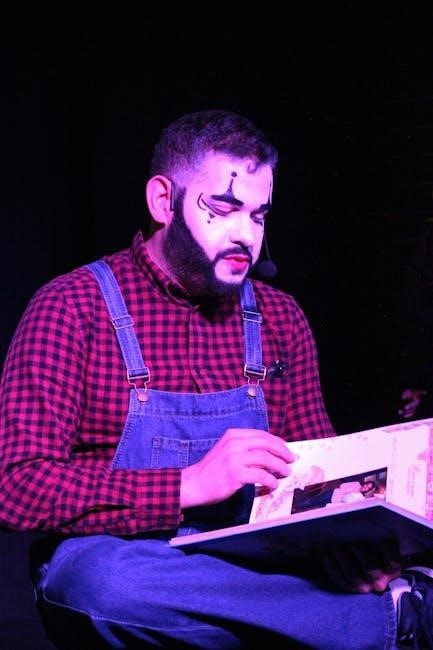
Key Scenes and Their Dramatic Importance
Act 1’s pivotal scenes—witches’ prophecies‚ Duncan’s declaration‚ and Lady Macbeth’s soliloquy—establish central conflicts and foreshadow future events‚ building dramatic tension.
Scene 2: The Report of Macbeth’s Bravery
This scene dramatically establishes Macbeth’s initial reputation as a valiant and courageous soldier. The Sergeant’s detailed report to King Duncan vividly portrays Macbeth’s heroic actions on the battlefield against the rebel Macdonwald and the Norwegian forces.

The Sergeant’s description is filled with hyperbolic praise‚ emphasizing Macbeth’s ruthless efficiency and bravery – he “carved out his passage” and “unseamed him from the nave to the chaps.” This creates a powerful image of Macbeth as a fierce warrior‚ a loyal subject‚ and a national hero.

Duncan responds to the news with gratitude and admiration‚ immediately recognizing Macbeth’s worth. He orders the Thane of Cawdor‚ who was a traitor‚ to be executed and bestows his title upon Macbeth as a reward for his bravery. This swift promotion foreshadows Macbeth’s future ambition and the corrupting influence of power. The scene is crucial in establishing Macbeth’s initial character and setting the stage for the unfolding tragedy.

Scene 3: The Witches’ Prophecies to Macbeth and Banquo
This pivotal scene introduces the supernatural element and initiates Macbeth’s tragic downfall. The three witches‚ shrouded in mystery and ambiguity‚ deliver prophecies that profoundly impact both Macbeth and Banquo. They hail Macbeth as Thane of Glamis‚ Thane of Cawdor‚ and future king – titles that spark his ambition.
Interestingly‚ the witches also address Banquo‚ prophesying that he will be “lesser than Macbeth‚ and greater‚” and that his descendants will become kings. This prophecy subtly plants seeds of envy and ambition within both men. The witches’ pronouncements are deliberately paradoxical and unsettling‚ creating an atmosphere of unease and foreshadowing future conflict.
Macbeth and Banquo’s reactions differ; Macbeth is immediately captivated and begins to contemplate the implications‚ while Banquo remains skeptical and wary of the “instruments of darkness.” The scene concludes with Macbeth and Banquo’s arrival at court‚ where Duncan confirms Macbeth’s new title‚ fulfilling the first part of the witches’ prophecy and fueling Macbeth’s ambition.
Scene 4: Duncan’s Declaration of Malcolm as Heir
This scene is crucial in establishing the political landscape and heightening the dramatic tension. King Duncan‚ portrayed as a gracious and trusting ruler‚ publicly announces his intention to name his son‚ Malcolm‚ as the Prince of Cumberland – effectively designating him as his heir. This declaration is a direct obstacle to Macbeth’s burgeoning ambition‚ as the witches prophesied Macbeth would be king.
Duncan’s decision to publicly acknowledge Malcolm demonstrates his faith in his son’s capabilities and his belief in a natural order of succession. However‚ it simultaneously ignites Macbeth’s desire for the throne‚ creating a conflict between his loyalty to the king and his ambition.
Macbeth‚ upon hearing this news‚ privately expresses his frustration and begins to contemplate the possibility of seizing the throne through more forceful means. This internal struggle marks a turning point in his character‚ foreshadowing his descent into darkness and violence. The scene subtly underscores the theme of ambition and its corrupting influence.
Scene 5: Lady Macbeth’s Soliloquy and Determination
This scene features Lady Macbeth’s famous soliloquy upon reading a letter from her husband detailing the witches’ prophecies. Her immediate reaction reveals a woman of immense ambition‚ even exceeding that of Macbeth himself. She fears Macbeth lacks the ruthlessness necessary to seize the throne and vows to manipulate him into action‚ calling upon dark spirits to “unsex” her and fill her with cruelty.
Lady Macbeth’s soliloquy is a powerful exploration of ambition and gender roles. She rejects traditional feminine qualities‚ viewing them as weaknesses that hinder her pursuit of power. Her determination to control events and influence Macbeth demonstrates her strong will and manipulative nature.
Upon Macbeth’s arrival‚ she skillfully masks her true intentions‚ presenting a façade of hospitality while subtly probing his thoughts and reinforcing his ambition. This scene establishes Lady Macbeth as a driving force in the play‚ a formidable character who will play a pivotal role in Macbeth’s tragic downfall.

Themes Explored in Act 1
Act 1 introduces core themes: ambition’s corrupting power‚ the influence of the supernatural‚ and the complex interplay between fate and free will‚ driving the narrative.
The Theme of Ambition and Its Corrupting Influence
Ambition is immediately established as a central‚ destructive force in Macbeth‚ particularly evident in Act 1. While initially presented as a valiant and loyal soldier‚ Macbeth’s encounter with the witches and the subsequent prophecies ignite a dangerous desire for power. This isn’t a simple yearning for advancement‚ but a consuming ambition that quickly begins to warp his character.
Lady Macbeth embodies this ambition even more forcefully. Her famous soliloquy reveals a ruthless determination to see her husband crowned king‚ and she actively manipulates him to overcome his moral reservations. She fears his kindness and lack of ruthlessness will hinder their ascent.
The play subtly demonstrates how ambition can corrupt even the noblest of individuals. Macbeth’s internal conflict – his struggle between loyalty and desire – foreshadows his eventual descent into tyranny. Act 1 lays the groundwork for understanding how unchecked ambition can lead to moral compromise and ultimately‚ destruction. The seeds of tragedy are sown with the first whispers of power.
The Supernatural and Its Role in Driving the Plot
The supernatural is powerfully introduced in Act 1‚ immediately establishing a pervasive atmosphere of darkness and uncertainty. The opening scene with the three witches sets a tone of ominous foreboding‚ hinting at forces beyond human comprehension influencing events. Their ambiguous prophecies regarding Macbeth’s future – becoming Thane of Cawdor and eventually king – are the catalyst for much of the play’s subsequent action.
These prophecies aren’t simply predictions; they actively drive the plot forward by planting the seed of ambition in Macbeth’s mind. The witches’ pronouncements create a sense of fate‚ yet also raise questions about free will and the extent to which Macbeth controls his own destiny.
The supernatural elements aren’t limited to the witches. References to dark magic and the unnatural permeate the play‚ contributing to a sense of moral disruption. Act 1 establishes the supernatural as a potent force shaping characters’ choices and propelling the narrative towards its tragic conclusion.
Fate vs. Free Will: A Central Conflict
Act 1 immediately establishes the complex interplay between fate and free will‚ a central conflict throughout Macbeth. The witches’ prophecies present Macbeth with a predetermined future‚ suggesting his destiny is already written. However‚ the play simultaneously explores whether Macbeth actively chooses to fulfill this destiny‚ or if he is merely a puppet of fate.
The prophecies act as a temptation‚ igniting Macbeth’s ambition but not forcing him to act upon it. His internal struggle – whether to embrace the predicted kingship through honorable means or through regicide – demonstrates the power of individual choice.

Lady Macbeth further complicates this conflict‚ urging her husband to seize control of his fate and defy any perceived limitations. The question remains: does Macbeth succumb to a predetermined path‚ or does he freely choose to pursue power‚ accepting the consequences? This tension fuels the dramatic arc of the play‚ leaving audiences to ponder the extent of human agency.

Literary Devices and Techniques
Shakespeare masterfully employs imagery‚ foreshadowing‚ and dramatic irony in Act 1. These techniques build suspense‚ establish mood‚ and hint at future tragic events.
The Use of Imagery in Establishing Mood
Shakespeare powerfully utilizes imagery throughout Act 1 of Macbeth to cultivate a distinctly unsettling and ominous mood. The opening scene‚ dominated by thunder‚ lightning‚ and the grotesque descriptions of the witches‚ immediately establishes an atmosphere of chaos and evil. This weather imagery isn’t merely descriptive; it foreshadows the turmoil to come and reflects the moral disorder that will grip Scotland.
Further‚ imagery of darkness and light pervades the act. Darkness often symbolizes evil and the unknown‚ while fleeting moments of light represent a fragile sense of order. References to clothing imagery – particularly relating to ill-fitting garments – symbolize Macbeth’s discomfort with his newfound title and the disruption of the natural order. Blood imagery‚ though more prominent later‚ begins to surface‚ hinting at the violence that will stain Macbeth’s hands and conscience.
These carefully chosen images aren’t accidental; they work synergistically to prepare the audience for the play’s tragic trajectory‚ creating a palpable sense of dread and anticipation.
Foreshadowing and Dramatic Irony in Act 1
Act 1 of Macbeth is rich with foreshadowing‚ subtly hinting at the tragic events to unfold. The witches’ prophecies‚ while seemingly offering Macbeth glory‚ simultaneously plant the seeds of his downfall. Their ambiguous pronouncements – becoming king‚ but also cautioning about Banquo’s descendants – create a sense of impending doom.
Dramatic irony is also skillfully employed. Duncan’s trust in Macbeth‚ praising his loyalty and bravery‚ is deeply ironic knowing Macbeth is already contemplating regicide. The audience is privy to Macbeth’s inner turmoil‚ his ambition warring with his conscience‚ while Duncan remains blissfully unaware of the danger he’s in.
Even seemingly minor details‚ like the repeated references to darkness and unnatural occurrences‚ foreshadow the moral and political chaos that will engulf Scotland. These techniques build suspense and engage the audience‚ creating a sense of inevitability as the play progresses towards its tragic conclusion.
Analyzing Shakespeare’s Language and Verse
Shakespeare’s language in Act 1 is powerfully evocative‚ establishing the play’s dark and unsettling atmosphere. He masterfully blends poetic verse – primarily iambic pentameter – with prose‚ often using prose for common characters and verse for nobility‚ highlighting status and emotional intensity.
The witches’ speech deviates from conventional verse‚ employing rhyming couplets and fragmented syntax‚ reflecting their chaotic and unnatural nature. Macbeth’s soliloquies reveal his inner conflict through complex metaphors and rhetorical questions‚ showcasing his psychological depth.

Pay attention to Shakespeare’s use of imagery – darkness‚ blood‚ and storms – which symbolize evil‚ violence‚ and moral corruption. The frequent use of paradox and antithesis‚ particularly in the witches’ prophecies‚ adds layers of meaning and ambiguity. Analyzing these linguistic choices unlocks a deeper understanding of the characters’ motivations and the play’s central themes.